
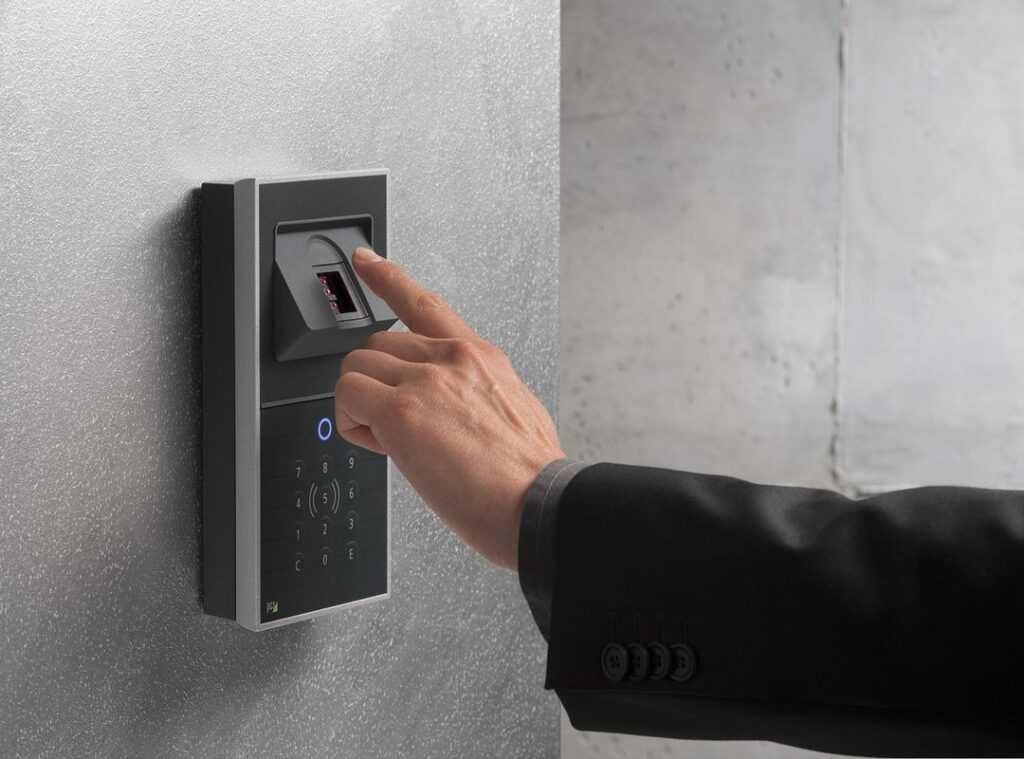
In our digital world, security feels like a game of whack-a-mole. As soon as you think you’ve got it under control, a new threat pops up. Traditional passwords and PINs just don’t cut it anymore.
They’re too easy to crack, leading to identity theft and data breaches that leave you exposed.
That’s where biometric security innovations come in. These technologies offer a way to protect ourselves and our organizations in ways that passwords can’t. Think about it: your fingerprint, your face, your unique traits.
They’re far less likely to be stolen or replicated.
In this article, I’ll dive into the latest advancements in biometric security. I’ve poured over extensive research, so you can trust that the information here is solid. You’ll learn how these technologies work and their real-world impact.
This is key in a time when cyber threats are evolving faster than ever. By the end, you’ll have a clearer picture of what the future looks like for biometric security. Let’s get into it and explore how we can secure our digital lives.
Beyond Fingerprints: The New Era of Biometrics
Biometric security isn’t just about fingerprints or facial recognition anymore. These traditional methods have their flaws. Like being a single point of failure or easy to spoof.
You know what I mean, right? Enter multi-modal biometrics. By combining biometrics like face and voice or iris and fingerprint, we create a much stronger, more accurate system.
It’s like adding layers to your security onion.
Let me give you an example. High-value assets and national ID systems are already using these combos. It’s not just about locking doors; it’s about redefining access.
But what if I told you there’s something even more futuristic? Welcome to the world of behavioral biometrics. This isn’t sci-fi.
It’s real and it works by analyzing unique patterns in how you type, walk, or even move your mouse. Creepy? Maybe a little.
But it offers “continuous authentication” without any need for user input.
Now, let’s talk about cultural implications. Is it okay to monitor us 24/7 in the name of security? We need to balance this with privacy concerns.
It’s a conversation worth having. And speaking of the future: ever thought about the electric vehicles transport revolution? It’s all part of the same wave of innovation reshaping our lives.
These biometric security innovations are not just tech buzzwords. They’re shaping our daily interactions, whether we like it or not. Are we ready for this new reality?
AI & Machine Learning: The Brains Behind Biometrics
Biometrics are changing fast, and it’s all thanks to AI and machine learning. Have you noticed how quickly your phone unlocks with a glance? That’s AI at work, improving biometric accuracy and speed.
It’s simple: AI algorithms are smart. They learn patterns, even the tiny ones, making sure your data stays secure.
AI’s not just about speed, though. It’s also about keeping the fakes out. Ever tried fooling a biometric scanner with a photo?
AI models can tell the difference between a picture and a real person. They even detect deepfake audio. things get futuristic.
Take facial recognition, for instance. It used to struggle in low light or when you moved. Now, AI lets it work in all kinds of lighting and angles.
Same goes for voice recognition. It filters out annoying background noise, focusing on what matters. Your voice.
Iris scanning? It’s sharper than ever.
And then there’s “adaptive biometrics.” AI learns and updates user profiles. So, if you’re aging or got a minor injury, it adapts. No more frustration with outdated data.
This is where biometric security innovations shine brightest.
Imagine a world where your devices anticipate threats before they happen. It’s not sci-fi; it’s where we’re headed. AI-powered security could soon tailor itself to your habits and surroundings.
Personalized and context-aware? Absolutely.
For more on biometric innovations, just think of how AI is setting the stage for smarter tech. It’s about time we embraced these changes. After all, who doesn’t want a bit more security in their pocket?
Biometrics and Ethics: The Human Touch
Biometric security innovations are changing the game, but there’s a catch. How do we make sure it’s a real person trying to access their phone and not a sneaky photo or deepfake? liveness detection comes in. It’s about making sure there’s a living, breathing human on the other side, not just pixels.

Eye blinking, micro-expressions, and 3D depth sensing are some techniques that help.
But let’s not get ahead of ourselves. We can’t ignore the privacy risks that come with storing sensitive biometric data. Imagine your fingerprint or facial data getting hacked.
Not fun. Strong encryption is a must, but there’s more. Privacy-enhancing technologies like template protection and decentralized storage solutions are stepping up to the challenge.
Now, let’s talk ethics. Surveillance and data misuse are real concerns. We need transparent systems that don’t discriminate.
It’s not just about tech; it’s about people. Different cultures have different views on data collection. Think GDPR or CCPA.
These regulations are trying to keep things in check globally.
It’s not all doom and gloom. There are efforts to build ethical AI frameworks that prioritize fairness. We’re talking about systems that are open and accountable.
The societal impact is huge, and we need to keep that in mind as we innovate.
As we dive into biometric security, we should also take note of how this aligns with other tech trends. The rise in smart home tech is a perfect example of how security is evolving alongside convenience.
In a world where our identities are increasingly digital, we have to ask ourselves: Are we ready for a future where security is just as much about ethics as it is about innovation?
The Future is Touchless: Distant Biometrics and Ubiquitous
Imagine a world where security doesn’t mean fingerprints and passwords. Instead, we’re diving headfirst into biometric security innovations that don’t even require a touch. Systems are evolving to authenticate us from a distance.
Ever thought you’d open up a door with just your walk? That’s gait recognition for you. Or maybe you’ll find your face scanned thermally without even knowing it.
Long-range iris scanning? Already making waves.
Why does this matter? For starters, it’s all about hygiene. No more smudging screens, no more germy fingerprint scanners.
Airports will process you faster than you can say “boarding pass,” and your smart home will know who’s coming without fumbling for keys.
The everyday integration is smooth. Autonomous vehicles, retail spaces, wearable tech (all) becoming biometric-aware. Invisible protection surrounds us, but is it too much?
Privacy concerns loom large. Will people embrace this or see it as Big Brother-esque? We need clear communication and user control to avoid a dystopian vibe.
But it’s not just theory. These advancements are being piloted now. We’re seeing tangible, hands-on digital solutions emerge.
It’s a futuristic vision. Security almost invisible yet stronger than ever. Who knew the future of safety would look so touchless?
The Future is Biometric
We face a serious need for better security measures. Biometric security innovations offer a way forward by using unique personal traits, making them tougher to crack than old methods.
Stay informed about these technologies. Evaluate biometric solutions for your security needs. Don’t wait until a breach happens.
Take charge now. Your digital future depends on it. Choose smartly and act decisively.
Secure your life today.
 Auriv Wolfquell writes the kind of emerging technology discussion content that people end up rereading a second time because they realize halfway through that it’s saying something more substantial than they first assumed. Not because Auriv relies on dramatic predictions or apocalyptic tech rhetoric — actually, quite the opposite. What makes the work effective is the ability to separate genuine technological shifts from the endless stream of noise that surrounds the industry. Auriv has spent enough time paying attention to Digital Advancements, Emerging Technology Discussion, and Advanced Gems that they’s developed a strong instinct for what matters long-term and what’s just temporarily fashionable.