
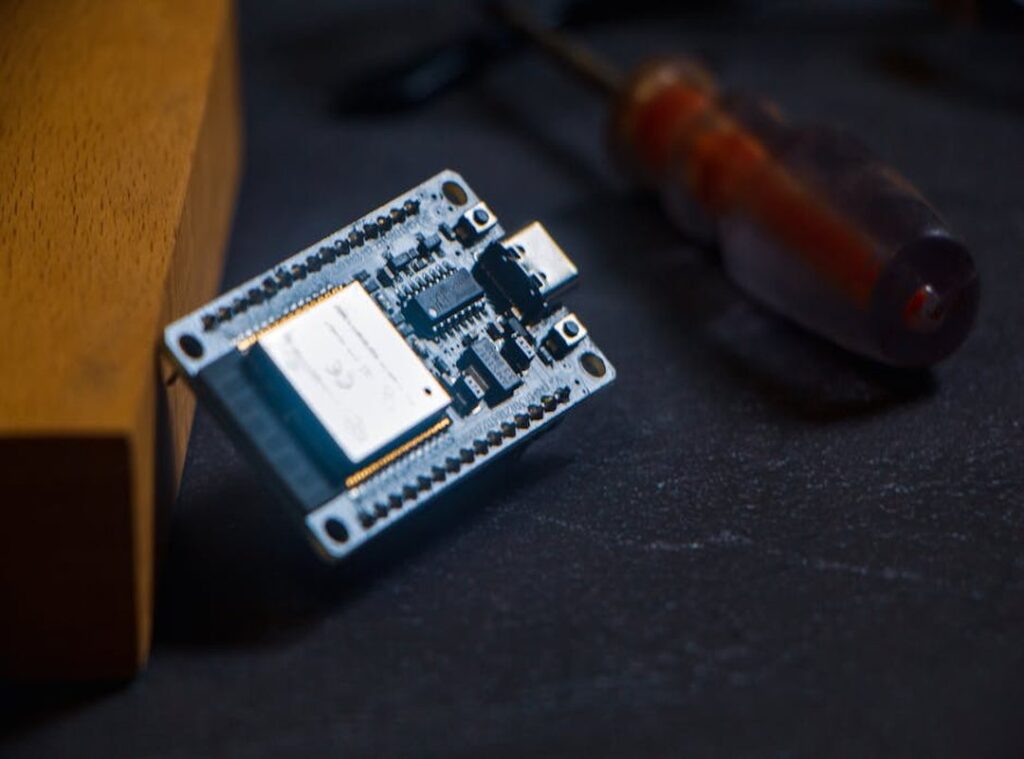
I built my first IoT app using a $12 microcontroller and a coffee-stained wiring diagram. It crashed. Then it worked.
Then it broke again.
You don’t need a lab or a degree to start.
You just need to know where to plug things in (and) what happens when you do.
This isn’t theory.
It’s the stuff I messed up so you don’t have to.
Why does How to Build Iot Applications Dtrgstech feel so tangled?
Because tutorials either drown you in jargon (or) skip the part where your sensor stops responding at 2 a.m.
I’ve been there. You’re probably there right now. Staring at a blinking LED wondering if it’s working or mocking you.
We’ll cut straight to the working parts. No fluff. No “just trust the cloud” hand-waving.
You’ll learn what every piece actually does (hardware,) software, networking. And how they talk without yelling over each other.
By the end, you’ll pick a real project. Wire it. Code it.
Make it send data somewhere useful.
Not someday.
This week.
What an IoT App Really Is
I’m not sure why people make IoT sound so complicated.
It’s just devices talking to the internet.
Your smart thermostat? It’s an IoT app. Your fitness tracker?
Also one. Even those lights you turn on from your phone. Yep, IoT.
Here’s how it works: the device collects data (like temperature or steps), sends it over Wi-Fi or cellular, and something acts on it. Like adjusting heat or sending you a notification.
Three parts make it happen: the thing (a sensor, camera, or lightbulb), the connection (Wi-Fi, Bluetooth, LTE), and the brain (software in the cloud or on a server).
An IoT app isn’t one gadget. It’s all of them working together. You don’t build just a sensor.
You build the whole loop.
I’ve tried building one myself. And got stuck on the connection part twice.
Still figuring out the right balance between battery life and data frequency.
How to Build Iot Applications Dtrgstech starts with knowing what you’re actually connecting (and) why.
Check out Dtrgstech if you want real talk, not buzzwords.
Some days I think the hardest part is naming the devices. Other days I think it’s security. I’m still not sure.
Pick Hardware That Doesn’t Fight You
I started with an ESP32. It cost $8. It worked on day one.
Arduino’s fine too (if) you want to blink LEDs and call it a win. (Which is fine. Seriously.)
Microcontrollers run one program. They don’t crash. They don’t need updates.
Single-board computers like Raspberry Pi? They run Linux. They can host a web server.
They will freeze while you’re demoing.
So ask yourself: Do you need a computer (or) just a switch that turns on when it’s hot?
Sensors are simpler than they sound. A temperature sensor reads degrees. A motion sensor says “something moved.” A light sensor says “it’s bright” or “it’s dark.”
No magic.
No jargon. Just voltage changes turned into numbers.
Start with one sensor. Not five. Not ten.
One. Try DHT22 for temp and humidity. It’s cheap.
It’s everywhere. It talks to ESP32 without crying.
Avoid fancy sensors first. Skip the CO2 meter. Skip the air quality suite.
You’re learning how to Build Iot Applications Dtrgstech. Not launch a weather satellite.
Buy from a real store, not a sketchy eBay listing that says “works with Arduino (maybe).”
If the datasheet is in Chinese and has no wiring diagram, walk away.
You’ll burn out faster than a bad resistor if your first sensor needs three libraries and a PhD. Keep it dumb. Keep it working.
Then add one thing at a time.
That’s how you actually finish something.
The Network Layer Is Just Plumbing
I plug my IoT devices into Wi-Fi because it’s simple.
It works out of the box on most routers.
Bluetooth? Great for short range. But your smart thermostat won’t talk to the cloud over Bluetooth.
Cellular and LoRaWAN exist. But they’re overkill for a home sensor.
Data leaves your device, hits your router, then goes out to the internet. That’s it. No magic.
Just packets bouncing through hardware you already own.
People call this the “network layer.”
It’s just the road. Not the car. Not the driver.
The road.
Security isn’t optional. If your camera streams over unencrypted Wi-Fi, someone will watch. Change the default password.
Use WPA3 if your router supports it. (Most do now.)
Want real-world context? Check Dtrgstech technology news by digitalrgs for how actual teams handle this mess.
Wi-Fi isn’t perfect. But it’s the least painful way to start.
You don’t need LoRaWAN to turn on a light.
How to Build Iot Applications Dtrgstech starts here (not) with code, but with cables and settings.
Your router is doing more work than you think. Is it patched? Are old devices still connected?
Don’t build on shaky plumbing.
Fix the pipe first.
The Brain of the Operation

I plug my sensor into a board and it talks to the cloud. Not magic. Just code and an internet connection.
Cloud platforms like AWS IoT, Azure IoT, or Adafruit IO are where your device sends data. And where you send commands back. (Yes, even from your phone while lying on the couch.)
That data lives somewhere. Usually in databases built for time-series stuff (think) temperature readings every 30 seconds for six months. You don’t host that on your laptop.
You can’t.
The cloud also crunches numbers. See a spike in humidity? It can text you.
Or turn on a fan. Or log it. No extra hardware needed.
You’re not building sci-fi. You’re wiring real things to real software.
Dashboards are just web pages showing charts and buttons. I click “off” and the light dies. I watch the graph climb as the oven heats up.
This is how to build IoT applications Dtrgstech. Not with buzzwords, but with HTTP requests and JSON payloads.
Some platforms cost money. Some start free. All demand you learn their auth model.
(Good luck the first time your device gets rejected for expired certs.)
You’ll fight connectivity bugs. You’ll misread units. You’ll swear at timestamps in UTC.
But when it works? You see live data flow. You flip a switch.
You know it’s real.
Room Temp Monitor: Your First Real IoT Thing
I built one in my Portland garage last winter.
It kept me from freezing while I figured out the wiring.
Get a DHT22 sensor and an ESP32. Plug them together. Write ten lines of Arduino code to read the temp.
Send it to ThingSpeak or Adafruit IO. Open your phone and watch the numbers change.
You don’t need a degree.
You just need five minutes and a working LED blink.
Start small. Make it read. Then make it send.
Then make it do something (like) text you when it’s over 75°F.
What’s the point of learning if it doesn’t solve a tiny real problem?
You’ll break things.
That’s how you learn what “ground” really means.
Want more hardware tips? Check out the How to Build Iot Applications Dtrgstech page.
Your First Smart Thing Starts Now
I built my first IoT project with a $12 sensor and a coffee-stained notebook. You don’t need permission. You don’t need perfection.
You already know How to Build Iot Applications Dtrgstech.
So why wait for “someday”?
That thing you keep thinking about. Your garage door, your plant waterer, your dumb thermostat (it’s) not too small.
It’s the only place to start.
Stop reading. Plug in a board. Blink an LED.
Then do it again tomorrow.
What’s one thing you’ll build this week?
Go.
 Tarynix Shadecrest has opinions about hardware and digital solutions. Strong ones. But unlike a lot of people writing in that space, those opinions usually come from actual experience rather than borrowed excitement. They covers In-Depth Hardware Evaluations, Hands-On Digital Solutions, and practical technology integration with the mindset of someone who has spent a long time testing things until the marketing language falls apart. Tarynix isn’t especially interested in products that sound impressive in launch presentations but become frustrating the second someone tries using them in daily life. That skepticism gives the writing a level of credibility readers tend to recognize quickly.